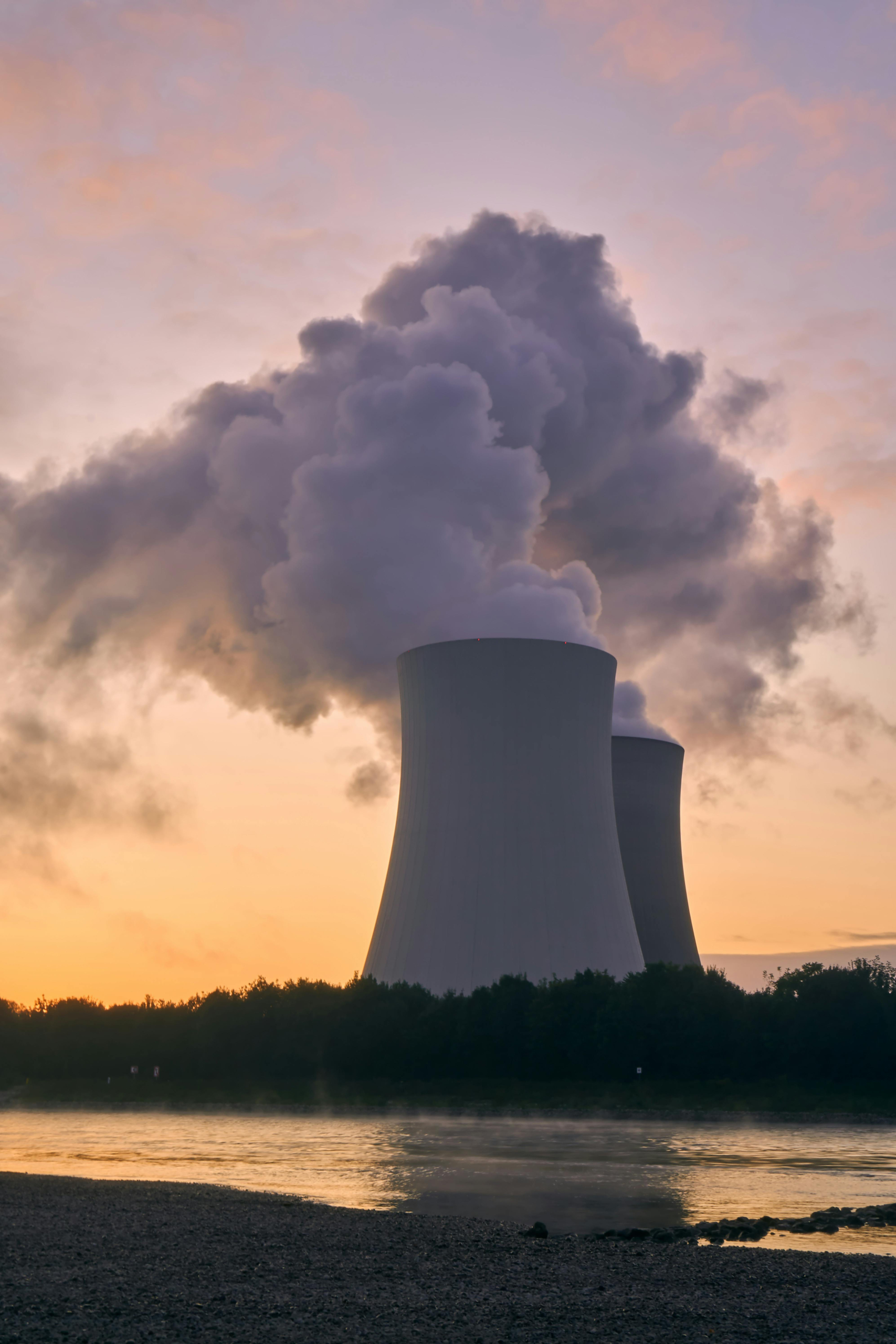
Nuclear and Water Consumption
It’s time to look into one of the industry’s biggest secrets: nuclear power’s extortionate water usage. We’ve previously talked about water’s vital role in the nuclear energy generation process:
“The actual method of creating nuclear energy relies on a process called fission to split an atom apart, releasing the energy held within it. The energy comes in the form of heat and radiation, heating water to produce steam. The steam, in turn, powers a generator, spinning a turbine to make electricity.”
The Nuclear Energy Institute estimates that, per megawatt-hour, a nuclear power reactor consumes between 1,514 and 2,725 litres of water. This is compared to coal with figures of 1,220 to 2,270 litres per MWh, and 700 to 1,200 litres per MWh for gas. It’s clear to see, just from these brief statistics, that the nuclear energy industry relies much more heavily on water than other sectors. A large nuclear power plant may use up to 1 billion gallons of water a day and, for this reason, they are often built next to rivers, lakes or oceans to utilise the bodies of water. The water is drawn from these sources and heated to create steam to power the turbine. It then condenses and can be reused in the power generation process. However, it is eventually pumped back into the body of water it originated from, albeit at very high temperatures. This can increase the temperature of the natural water source by up to 30 degrees, posing risks to the aqua life.
The Union of Concerned Scientists USA (UCSUSA) goes into a lot of depth when discussing water’s role in nuclear power plants, stating that after steam passes through a turbine “more water is needed to cool the steam back into water to reuse for generation; this steam-cooling step accounts for virtually all of the water used in most power plants”. They describe the different steam cooling processes which are vital in nuclear power generation, discussing both once-through cooling and recirculating cooling. The water usage figures for once-through cooling range from 25,000 to 60,000 gallons of water per megawatt hour of electricity produced, dropping to 800 to 2,600 gallons for recirculating cooling. This is because, as the name suggests, the recirculating cooling method of turning steam into water allows for water to be pumped back into the condenser to be used again. Once-through cooling, on the other hand, means that any water used in the nuclear power generation process in pumped back into the body of water from which it came, raising a whole host of other issues which we touched on briefly before. More information can be found via US Fish and Wildlife Service, and EurekAlert.
Quartz investigated the hidden water footprint of fossil fuel and nuclear power plants.
It’s clear to see that nuclear power uses significantly more water than other forms of energy production. While perhaps it’s not as far ahead of coal as anti-nuclear sources profess, it’s obvious that nuclear power cannot be presented as a “green” form of energy production when it comes to water use. Aside from the water used in the nuclear power generation process, it is also important to consider the water needed to build the power plant and extract fuels – in this case uranium. Nuclear power stations are notorious for their lengthy construction periods and are regularly decommissioned – so how does this contribute to nuclear’s already-large water footprint?